

When technology sows the seeds of sustainable agriculture
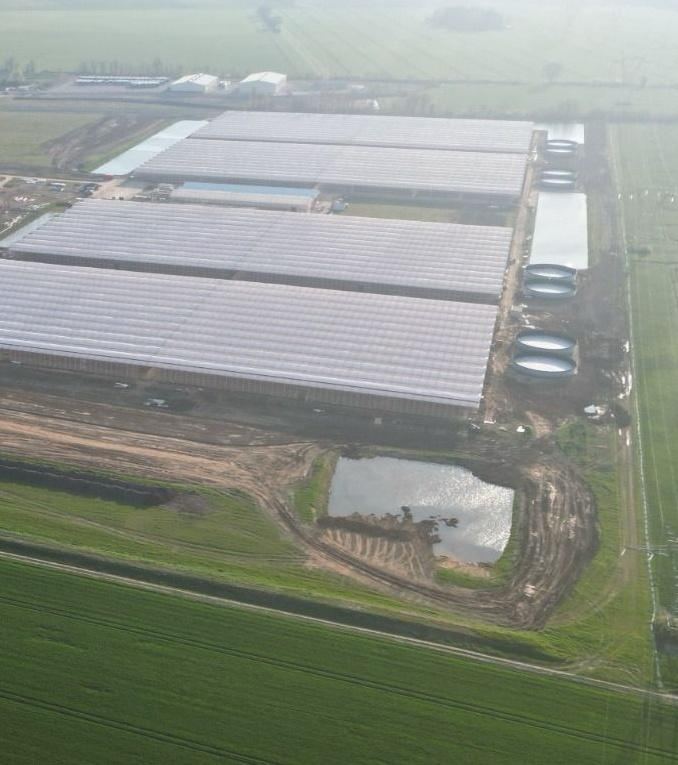
What if technological innovation became a driver of the agroecological transition? With a model based on automation, local production and soil preservation, Les Fermes Debout offers a hybrid approach to farming, at the crossroads of robotics and organic agriculture. Supported by Technofounders, the company champions a model in which profitability, sustainability and job creation go hand in hand.
Rethinking market gardening without turning away from the land
Founded in 2018, Les Fermes Debout addresses a twofold challenge: producing quality vegetables as close as possible to where they are consumed, while making farming jobs attractive again. Its model is inspired by bio-intensive market gardening, a long-established method based on soil fertility and the pursuit of high yields without chemical inputs, to which Les Fermes Debout adds a technological dimension.
This is where technology changes the game. By automating some of the tasks (soil preparation, sowing, weeding) with a robotic gantry mounted on rails inside the production greenhouses, Les Fermes Debout simplifies daily work without abandoning the principles of working with living systems.
The choice of a controlled environment is decisive: it makes it possible to control growing conditions, make harvests more reliable and achieve up to eight crop cycles a year, compared with two or three in conventional farming.
Optimising without distorting
At Les Fermes Debout, robots do not roam the fields. The technology is deliberately deployed in a defined environment: the greenhouse production units, where automation can be fully exploited without being exposed to external hazards.
At the heart of the system: a robotic gantry mounted on rails, which extends over more than a hundred metres and can carry different modules as required: sowing, soil preparation, weeding…
“Installing such a system outdoors would be unrealistic. Under glass, we can maximise efficiency while ensuring more consistent harvests.”
Thibault Millet, CEO of Les Fermes Debout
This consistency also allows rotations to be intensified: a single plot can produce up to eight harvests a year, a level that is hard to reach without the support of technology.
A resilient model capable of scaling up
Les Fermes Debout is seeking to build a viable model in a context of growing uncertainty. As farming faces inflation, climate hazards and rising energy costs, securing production is becoming a strategic issue. The production units developed by the company are designed to limit these structural dependencies.
Controlling the environment stabilises yields. Automating certain tasks reduces dependence on labour. Streamlined energy use helps to better absorb external shocks.
This stability affects not only production costs but also the final price of the vegetables, with the ambition of making local, sustainable food accessible to as many people as possible.
“One of the major challenges is to decouple agricultural prices from rising energy prices,” explains Les Fermes Debout, with the aim of restoring meaning to the value chain.
Thibault Millet nevertheless points out: “This model cannot be replicated everywhere. There must be strong local demand, particularly from public bodies and school catering, which are essential partners at our scale.”
Another important point: at Les Fermes Debout, automation does not destroy jobs, it creates them. Each 20-hectare farm operated by the company generates around 40 permanent jobs, with the ambition of offering attractive, lasting farming careers.
“We want to create stable, properly paid jobs, so that young people can consider a career in farming without sacrificing their quality of life,” explains Thibault Millet.
Reconciling tradition and innovation
But how do you introduce such an innovation into a sector deeply attached to its traditions and know-how? Thibault Millet acknowledges that he met with some scepticism at first, particularly from local authorities, which quickly faded once the project was presented in all its dimensions.
As Les Fermes Debout prepares to scale up, its roadmap is clear: build a local, resilient and profitable farming model.
“In ten years’ time, I would like to see Les Fermes Debout deployed on a large scale, with turnkey farms capable of meeting local food needs,” concludes Thibault Millet. “But before that, the key is to prove that our model works, and not just on paper.”
“The idea of introducing technology into agriculture can raise concerns. But our technology is not there to replace: it serves a clear purpose, to produce better, more locally and more sustainably.”
Thibault Millet, CEO of Les Fermes Debout
Useful links
Further reading